
Post Cure
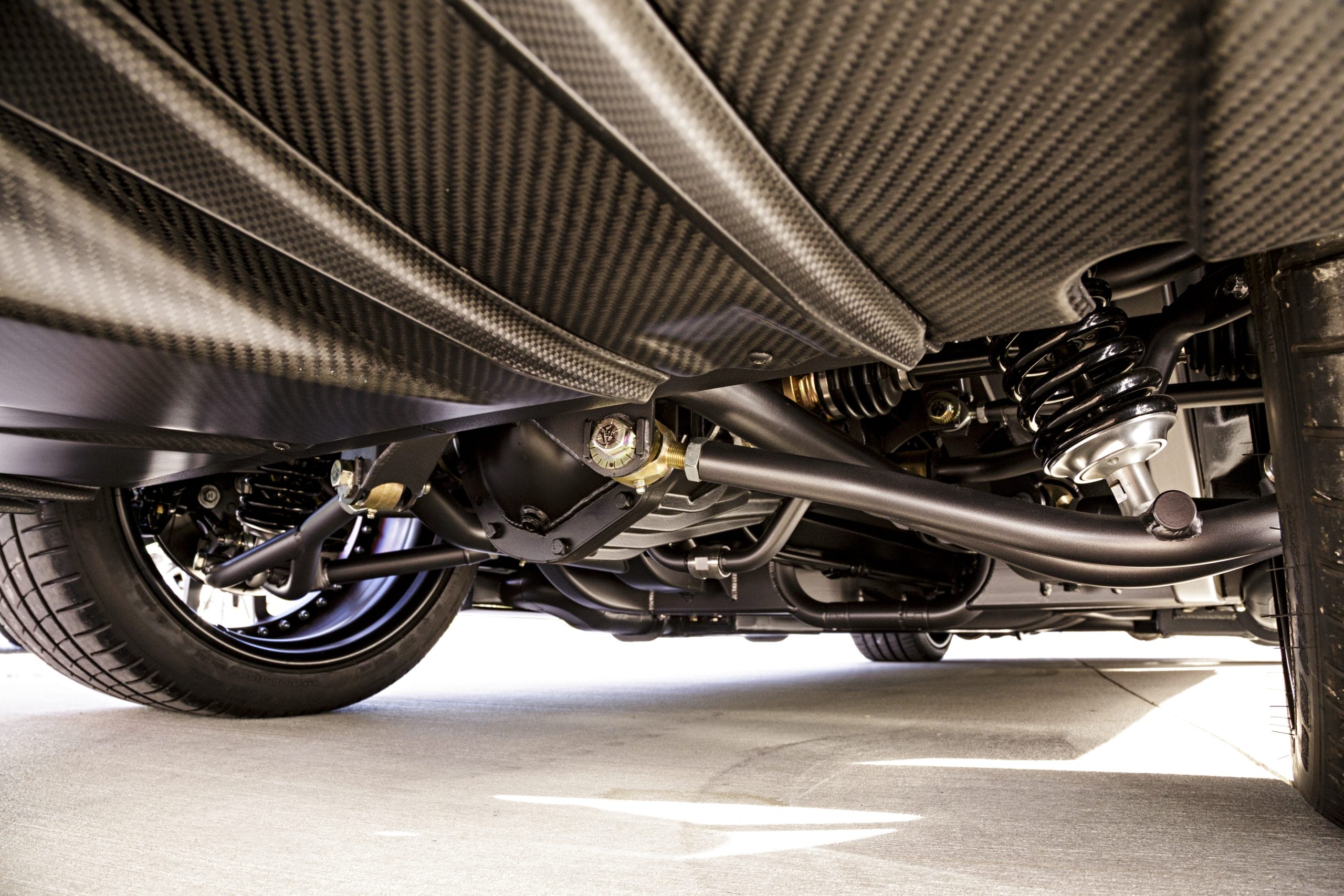
Photo Credit: Cuda built by Z Rodz and Customs. Photography by McGaffin Photography for Wheel Hub Magazine.
Achieving optimal physical properties in your epoxy components often requires post-curing—controlled heating after the initial cure stage. Let’s delve into the specifics:
Understanding Post-Curing
Certain resin/hardener combinations, such as LAM-251-HT, LAM-239, and HTP variants, require an elevated-temperature post-cure for peak performance. Post-curing enhances physical strength and thermal properties beyond what’s achievable with room-temperature cures alone. Laminating and Infusion products will see added benefits from post-curing as well.
Determining Post-Cure Schedules
Each resin/hardener combination has unique post-cure requirements to unlock 100% of its potential properties. Published properties won’t be reached if post-cure temperatures fall below specified levels. Establish post-cure schedules based on desired physical properties, equipment limitations, and material tolerances.
Executing Post-Cure
During post-cure, gradually raise the part’s temperature to the target, hold it, and then slowly cool it. To avoid thermal shock, increase temperatures gradually and don’t exceed maximum thresholds. The post-cure schedule dictates the maximum potential properties achievable.
Recommended Post-Cure Guidelines
Follow these guidelines for optimal post-curing:
PRO-SET® Laminating and Infusion Epoxies
- Increase the temperature from room temperature by 15°–20°F (8°–11°C) per hour.
- At every 40°F (22°C) increase in temperature, hold that temperature for an extra hour to allow internal laminate temperatures to equalize. Resume the temperature increase of 15°–20°F (8°–11°C) per hour.
- Continue this cycle until the post-cure temperature is reached.
- Hold the temperature as indicated on the resin/hardener data sheet.
- Decrease the temperature at a rate of 20°F (11°C) per hour.
- Hold at 95°F (35°C) for two hours to allow for normalization.
- Turn off heat and allow to cool to room temperature. This schedule is recommended when curing a lighter laminate. The temperature ramp speed should be decreased for molds, plugs, and heavy laminates. We recommend building test panels of the finished laminate schedule to determine the ideal post-cure cycle. Thermocouple wires embedded in the test laminate will measure the temperature lag during the post-cure.
PRO-SET® High-Temperature Epoxies
- Increase the temperature from room temperature at a rate of 12°F (7°C) per hour.
- Hold at 140°F (60°C) for 2 hours to allow internal laminate temperatures to equalize. Resume the temperature increase of 12°F (7°C) per hour.
- Hold the temperature as indicated on the resin/hardener data sheet 275°F (135°C).
- Decrease the temperature at less than 20°F (11°C) per hour.
- Hold at 95°F (35°C) for two hours to allow for normalization.
- Turn off heat and allow to cool at room temperature. The schedule is recommended for curing a lighter laminate. The temperature ramp speed should be decreased for molds, plugs, and heavy laminates. We recommend building test panels for the finished laminate schedule to determine the ideal post-cure cycle. Thermocouple wires embedded in the test laminate will measure the temperature lag during post-cure.
Heating Methods
Various heating methods are available, from insulated ovens to radiant heaters. However, radiant heating may lead to uneven curing and laminate print-through, so caution is advised.
Post-Curing in Molds
Molds should be post-cured at temperatures exceeding those required for finished parts to prevent distortion. Similarly, plugs used in mold construction should be post-cured at higher temperatures to maintain fairness.
Adhering to these guidelines and considering specific resin/hardener combinations can achieve optimal post-cure results, ensuring the highest quality in your epoxy components. Consult the respective Technical Data Sheets for detailed instructions tailored to your products.
Need More Information?
Our Experienced Team is available to help
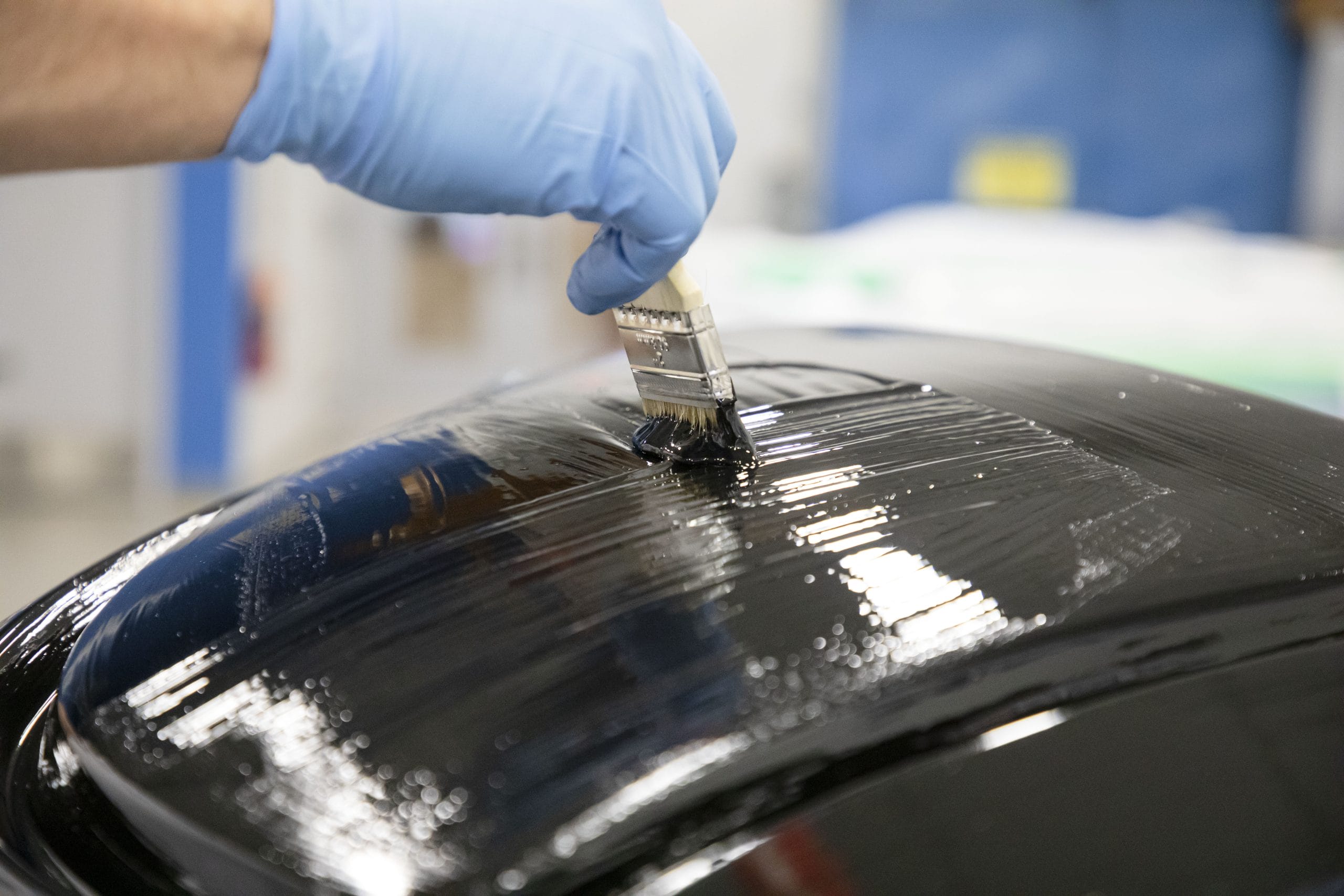
PRO-SET HTP High-Temp Epoxy Surface Coat Application by GBI.